
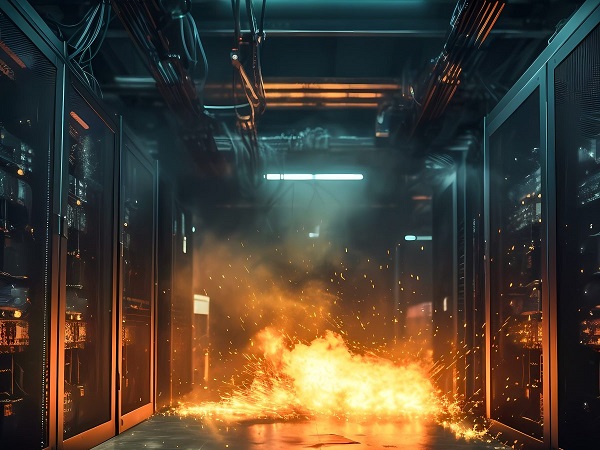
On September 28, 2025, a devastating fire broke out at a Datacenter housing critical South Korean government systems, resulting in the catastrophic loss of approximately 858TB of data. The blaze, which broke out in the server room of a facility managed by the Ministry of the Interior and Safety, immediately crippled access to national identity, tax, and social welfare systems. This incident underscores the perilous consequences of inadequate disaster recovery protocols in public infrastructure, especially in an era where digital services form the backbone of citizen-government interaction.
Outcomes and Impact on Government Services
The fire disrupted services across key ministries including the Ministry of Health and Welfare, National Tax Service, and Immigration Office. Citizens reported inability to access digital ID platforms, file tax returns, or renew visas. Government officials estimate full system restoration may take months, not weeks, as manual data reconstruction and system reconfiguration are now required. The absence of redundant backups means some data — particularly user records, historical transactions, and administrative logs — are permanently lost. The Data center serves over 10 million active users monthly; prolonged outages threaten public trust and administrative efficiency.
What Should Have Been Done Differently
This disaster could have been mitigated with a multi-layered Cloud and On-Premises Backup strategy. At minimum, the government should have implemented geo-redundant backups — maintaining mirrored copies in physically separate locations. Cloud-based disaster recovery offers automatic, encrypted, and scalable replication across regions, ensuring continuity even if one facility is incapacitated. Enterprises and public institutions alike must adopt the “3-2-1” backup rule: three copies of data, on two different media, with one copy stored offsite (preferably in the cloud). Cloud providers like AWS, Azure, and Google Cloud offer automated failover, immutable storage, and compliance-validated recovery SLAs - features absent in the Sejong facility’s architecture. The cost of implementing such resilience is negligible compared to the financial, legal, and reputational costs of total data loss.
The South Korean government's failure to implement basic backup protocols represents a level of negligence that ultimately results in erosion of public trust and potential business failure.
Let's not forget that South Korea is home to Big names in the IT, Automotive and Robotics industries etc
- Samsung Electronics: Known for semiconductors (DRAM, NAND), smartphones, TVs, and a massive R&D budget.
- SK Hynix: A global top-tier memory chip manufacturer, crucial to the semiconductor industry.
- LG Electronics: A major player in consumer electronics and home appliances, with significant IT integration.
- Hyundai Motor Company: The largest automaker in South Korea
- Kia Corporation: A key part of the Hyundai Group and a major player in both mass-market and electric vehicles.
- HD Hyundai Robotics & Hyundai WIA: Strong presence in industrial automation, smart factories, and logistics.
This incident is a stark reminder that IT engineers and infrastructure architects must proactively design for failure, not just functionality. Negligence in disaster planning — whether through underfunded systems, outdated redundancy models or reliance on single-point-of-failure architectures — inevitably leads to cascading failures that can cripple organizations. In cloud-native environments, resilience is not an add-on; it’s fundamental. The South Korean fire should serve as a global case study: no Data center is immune, and no system is too “secure” to require a robust Backup strategy, being it Cloud or On-Premises.
This type of IT disruptions can happen to any kind of entities, governments, big corporations or start-ups alike.
Read more:
[1] The Korea Times