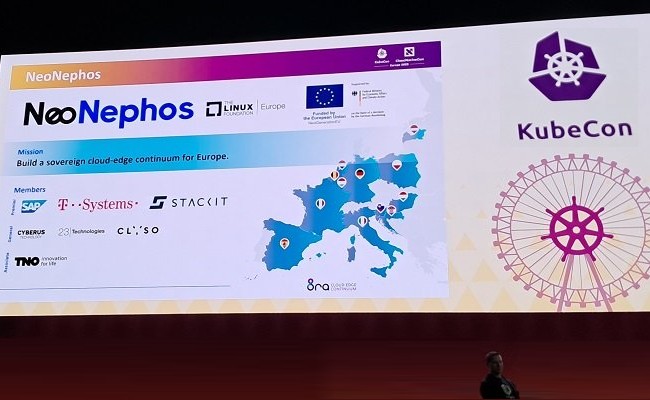
The NeoNephos European sovereign cloud initiative was officially launched at KubeCon + CloudNativeCon Europe 2025. This project represents the latest attempt to establish European cloud independence through a unified, compliant infrastructure designed specifically for EU regulatory requirements.
NeoNephos ("new cloud" in Greek) aims to deliver a digital platform that prioritizes data sovereignty while maintaining competitive technical capabilities. According to the initiative's documentation, the platform implements privacy, transparency, and collaborative governance as foundational architectural elements rather than compliance add-ons.
So what exactly is NeoNephos ?
- a Foundation and community
- a digital platform spanned across multiple providers, infrastructures and software
- a hub for developing and promoting open source solutions
- a project under the The Linux Foundation umbrella
NeoNephos has11 ongoing open source projects at the time of writing this article. The areas covered span from public / private cloud management and governance to Linux, containers, Kubernetes, bare-metal infrastructure, open discovery protocols.
One key candidate is Platform Mesh, which concerns itself with establishing interoperability between service providers. Platform Mesh has been donated to the NeoNephos Foundation and all it's projects, aligns with the strategic objectives of IPCEI-CIS under neutral governance
Dr. Elena Bergmann, NeoNephos Technical Director, emphasized the platform's dual focus on technical performance and regulatory compliance:
We've engineered the system from first principles to eliminate the traditional tradeoff between regulatory adherence and technical capability.
NeoNephos implements a multi-stakeholder governance model incorporating public institutions, private enterprises, and academic partners across multiple EU member states. This structure aims to prevent the fragmentation issues that have hampered previous European cloud initiatives.
Initial technical evaluations presented at KubeCon demonstrated NeoNephos's implementation of GDPR compliant data handling mechanisms at the infrastructure level. The platform features built-in controls for geographical data restrictions, transparent processing pipelines, and granular consent management APIs accessible to developers.
European Public Cloud Initiative Landscape Analysis
NeoNephos enters an evolving European cloud ecosystem characterized by multiple initiatives with varying technical approaches and market penetration. Gaia-X, launched in 2020, created data infrastructure standards and interoperability frameworks but faced implementation challenges due to its consortium complexity and focus on standards over operational infrastructure.
EuroCloud has established certification frameworks and industry networks that have increased European cloud adoption rates, though primarily for SaaS rather than infrastructure services. Their technical standards have influenced NeoNephos's certification approach, particularly regarding data protection specifications.
Corporate initiatives have recently emerged in the European cloud market. Schwarz Group (Lidl's parent company) deployed Stack IT, a cloud platform focusing on regional data centers and European-specific workload requirements. This implementation demonstrates increased market recognition of European cloud sovereignty requirements and technical feasibility.
Non-European providers have responded to sovereignty concerns with specific compliance programs. AWS's European Digital Sovereignty Commitment introduced technical controls for data residency and access management. However, research published in Policy & Internet documents the fundamental architectural limitations of these adaptations when core technology governance remains outside European jurisdiction.
NeoNephos differentiates through its integrated approach to technical architecture, compliance frameworks and European governance. The initiative's architecture incorporates lessons from previous European cloud projects, specifically addressing technical limitations that restricted adoption.
Read more:
[1] NeoNephos.org